
Pump Comparisons
Insulin Pump Comparison for Mixed Meals: Extended Bolus, Algorithms, and Real-World Tradeoffs
For high-fat meals, pump behavior matters as much as formula choice. This comparison focuses on what insulin users actually need: extended bolus flexibility, automation behavior, and practical cost considerations.
Quick comparison matrix
| System | Automated algorithm | Extended/square bolus control | Best fit | Cost signals* |
|---|---|---|---|---|
| Tandem t:slim X2 + Control-IQ | Hybrid closed-loop with predictive adjustments. | Good dual/extended bolus options in manual workflows. | Users who want mature ecosystem + structured settings. | Pump hardware + infusion sets + CGM subscription costs. |
| MiniMed 780G | Aggressive autocorrection focus. | Supports advanced meal handling but user learning curve matters. | Users prioritizing automation intensity. | Hardware + proprietary consumables + sensor ecosystem. |
| Omnipod 5 | Tubeless hybrid automation. | Flexible mealtime use with pod-based convenience. | Users preferring tubeless wearability and simplicity. | Ongoing pod supply cost + CGM dependency. |
| CamAPS FX ecosystems | Adaptive model-led control (market dependent). | Meal strategy flexibility varies by paired hardware. | Users in supported regions with strong clinic support. | App licensing model + compatible pump/sensor stack. |
*Pricing varies by insurance, region, and contract. Always verify current payer details with your provider and manufacturer.
Pros users report most often
- Better overnight stability with automated basal modulation.
- Reduced correction burden vs fully manual regimens.
- More confidence for repeated meal patterns when settings are tuned.
- Data-rich history for endo visits and plan adjustments.
Common limitations
- Automation is not a substitute for meal strategy.
- High-fat meals still require planning and follow-up review.
- Sensor interruptions can degrade algorithm performance.
- Consumable and hardware costs remain significant.
Meal strategy comparison by pump context
| Scenario | Manual MDI | Pump without automation | Hybrid closed-loop |
|---|---|---|---|
| High-carb, low-fat lunch | Carb ratio usually enough | Standard bolus, minimal extension | Automation often smooths residual variance |
| Pizza / high-fat dinner | Difficult timing and split strategy | Strong benefit from dual/extended bolus workflows | Automation helps but does not eliminate delayed spike risk |
| Late-night meal | Higher overnight uncertainty | Extended delivery can help when tuned | Best outcomes usually come from tuned settings + review loops |
Where GlucIQ fits
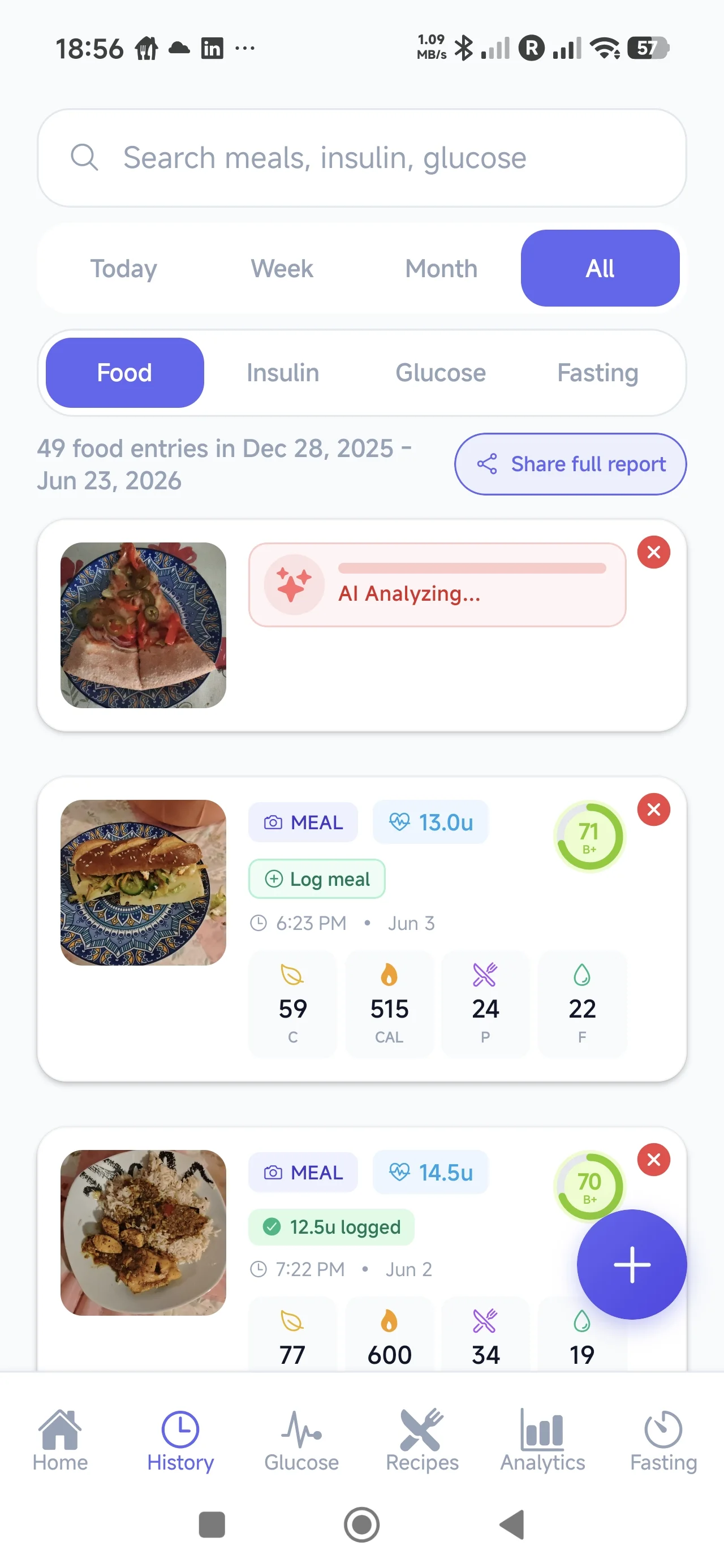
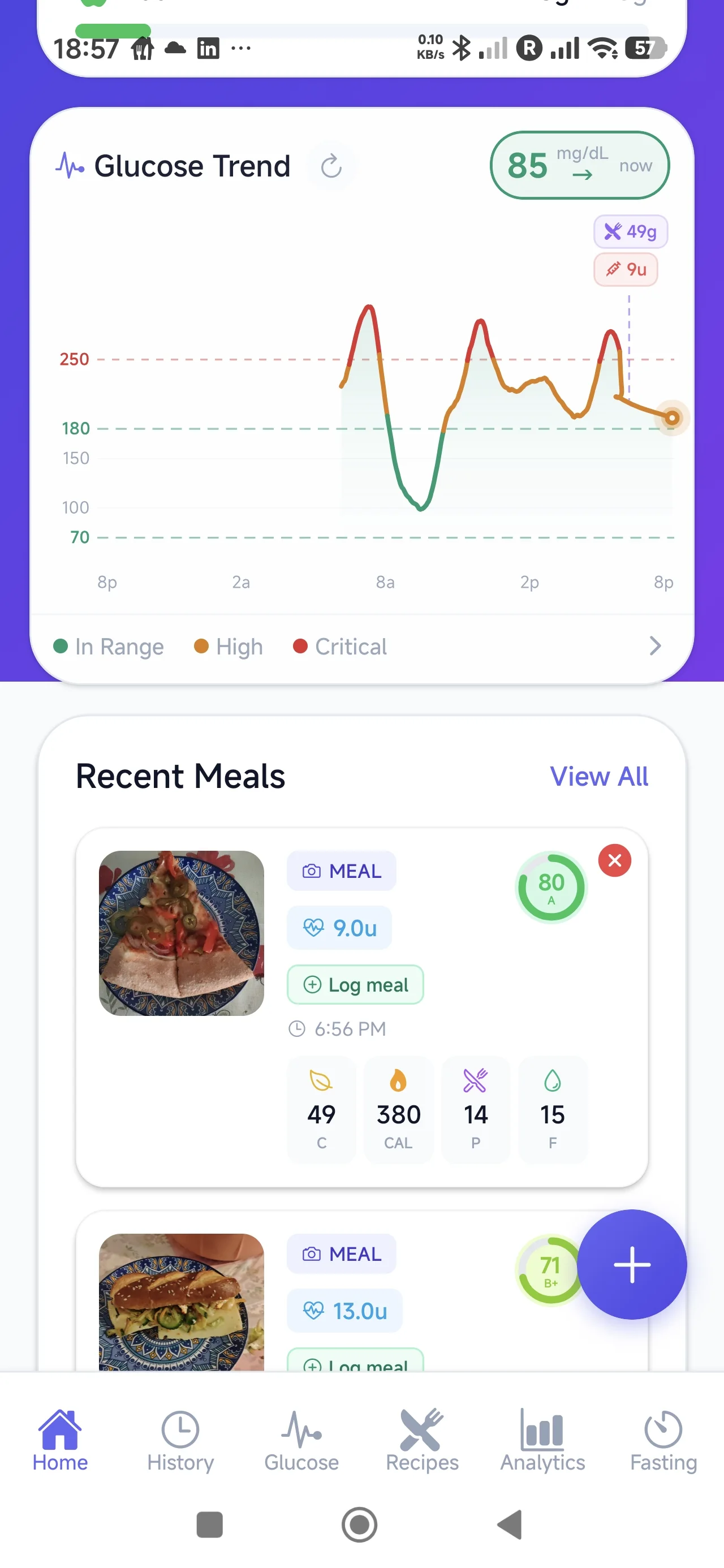
GlucIQ is not a pump algorithm replacement and does not control insulin delivery. It helps users compare meal composition, bolus strategy, and glucose response across pump and non-pump contexts in a consistent workflow.
Medical disclaimer: This article is educational and not medical advice. Insulin dosing and pump settings must be decided with qualified clinicians.