

Insulin Dosing Formula Comparison Matrix: Carb Counting vs Warsaw vs Sieradzki vs TAG
Insulin users keep hearing different formula names without a practical side-by-side comparison. This guide compares the major meal-dosing approaches, where each one performs well, and where risk increases.
Why this comparison matters
Most people start with carbohydrate counting only. That works for low-fat meals but can under-dose high-fat and high-protein meals (pizza, burgers, restaurant food). Newer methods add structure for delayed glucose rises, but complexity and hypoglycemia risk also increase. The right method depends on context, pump capabilities, and clinician guidance.
Formula matrix
| Method | Core idea | Strengths | Limitations / risk | Best use case |
|---|---|---|---|---|
| Carb counting (ICR) | Bolus based only on carbohydrate grams and insulin-to-carb ratio. | Simple, fast, easy to teach, low cognitive load. | Often misses late hyperglycemia after high fat/protein meals. | Low-fat meals, beginners, quick repeat meals. |
| Warsaw / Pankowska (FPU) | Adds insulin for fat+protein using FPU and extended bolus timing. | Better control for delayed spikes; more physiologic for mixed meals. | More complex setup; can increase early hypoglycemia if over-applied. | Pump users, high-fat dinners, pizza-style meals. |
| Sieradzki (+30%) | Add ~30% of carb bolus as additional extended insulin. | Simple practical rule; less math than FPU workflows. | Less individualized; may under-dose or over-dose edge meals. | People needing an easier step-up from carb-only dosing. |
| TAG-style mixed models | Uses total available glucose estimate from carbs + adjusted protein/fat factors. | More complete nutrient modeling; useful for advanced users. | High complexity, difficult daily adherence, requires careful tuning. | Advanced users with stable logging habits and clinical support. |
Pros and cons by complexity
Lower complexity
- Carb-only and Sieradzki methods are easier to execute under daily stress.
- Faster decisions when eating out or correcting quickly.
- Lower setup burden for new insulin users.
Tradeoff
- May leave delayed postprandial rise untreated.
- Needs retrospective correction more often.
Higher complexity
Potential benefit
- FPU/TAG approaches improve late window control in high-fat meals.
- Supports pattern-driven improvements for repeated meal types.
- Can reduce overnight “mystery highs” after dinner.
Tradeoff
- Requires more setup and meal composition awareness.
- Higher risk if formula assumptions are wrong for the individual.
Worked comparison (pizza meal)
Meal: 80g carbs, 40g fat, 35g protein. ICR: 1:10.
- Carb-only: 8.0U upfront.
- Sieradzki: 8.0U + 2.4U extended (30% add-on).
- Warsaw (FPU): fat+protein kcal = 40×9 + 35×4 = 500 kcal = 5 FPU; equivalent carbs ≈ 50g; additional insulin = 5.0U typically extended over longer duration.
- TAG-style: depends on chosen coefficients and patient-specific factors.
Important: These examples are educational comparisons only. They are not dosing instructions and must be reviewed with your diabetes care team.
How GlucIQ uses this comparison safely
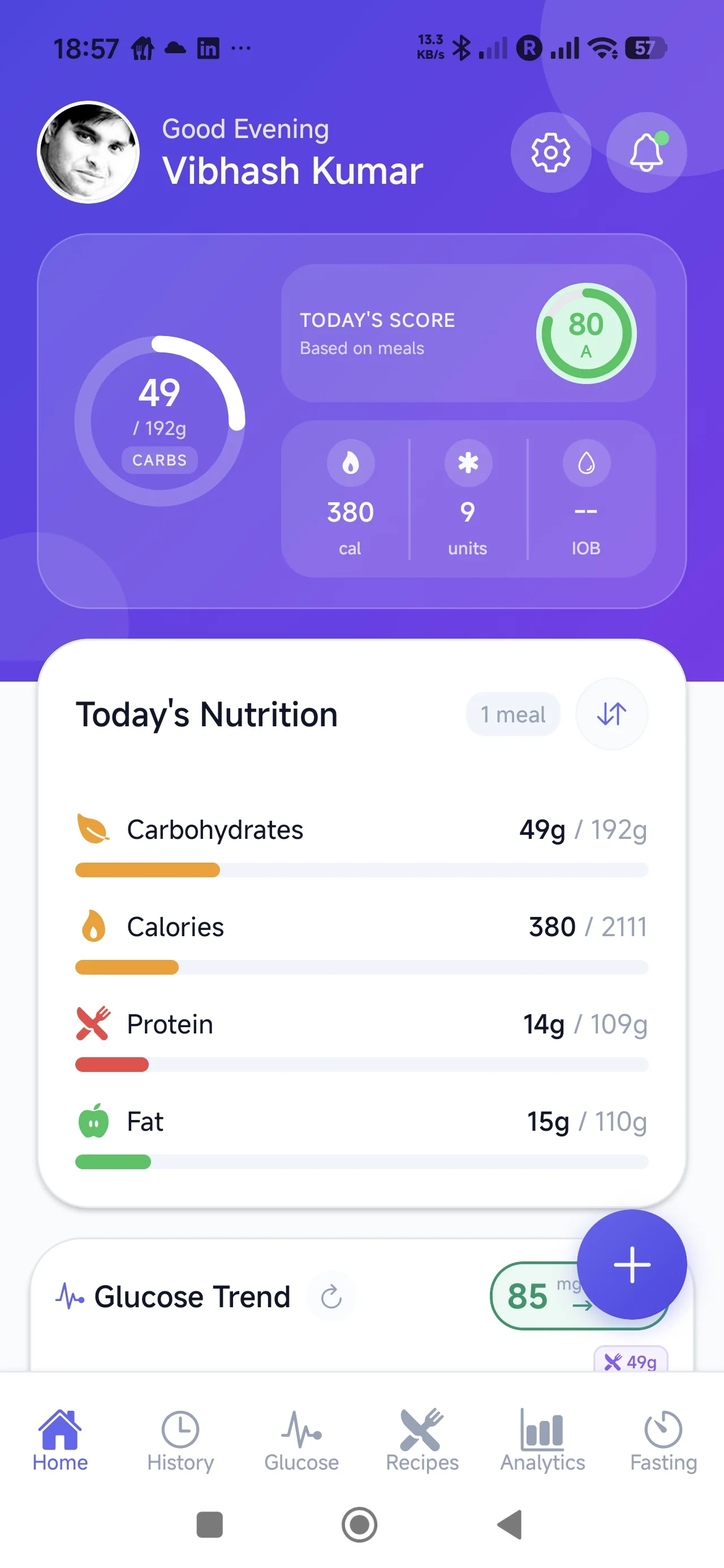
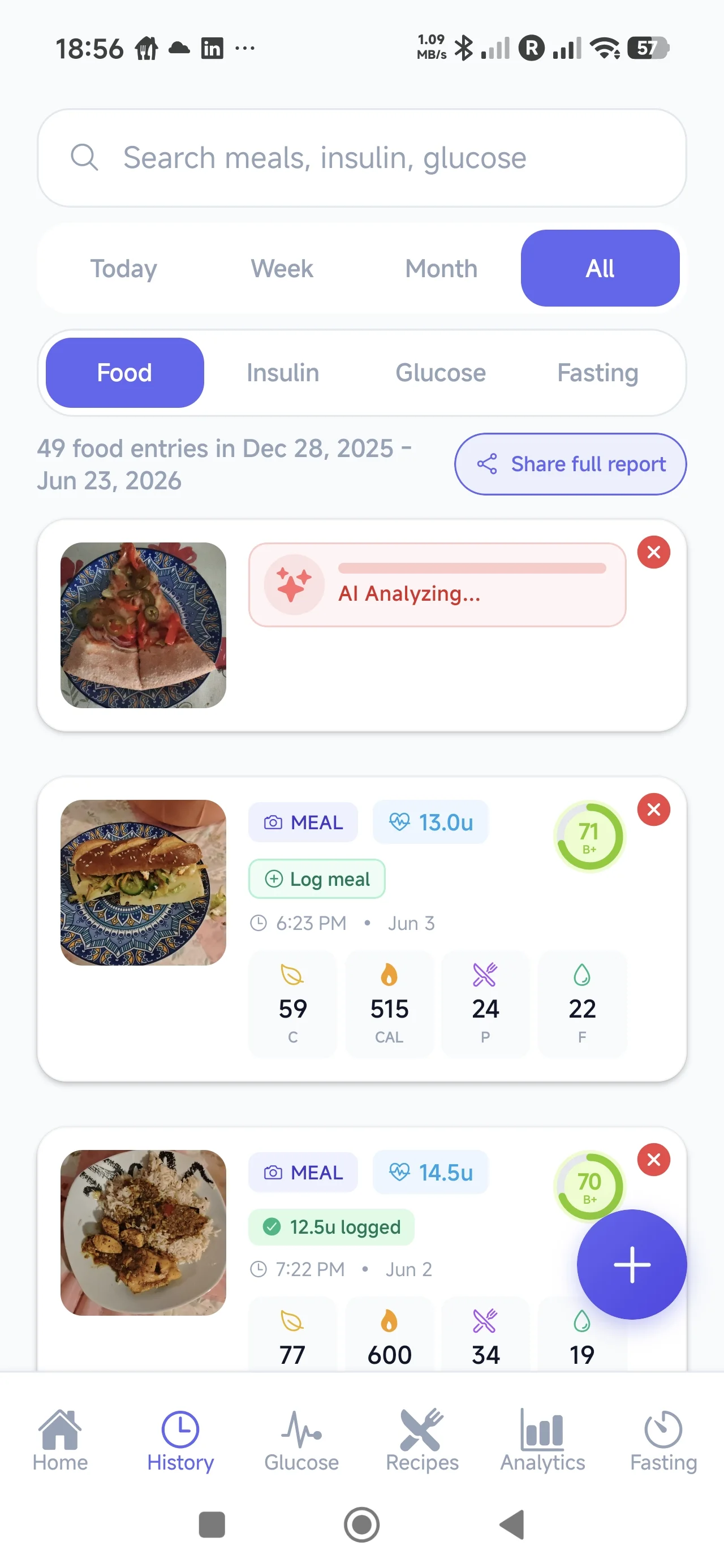
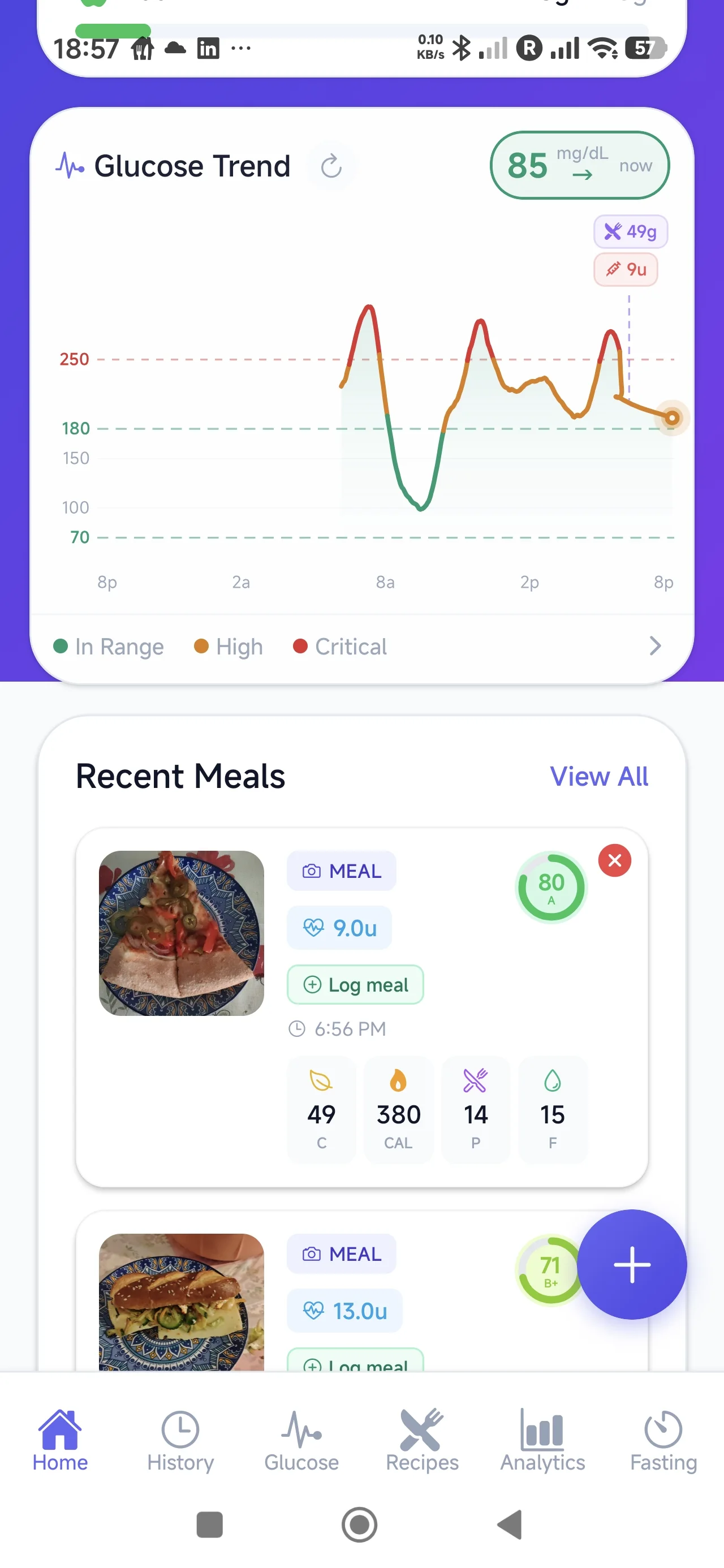
GlucIQ does not autonomously choose formulas or prescribe insulin. It helps users and clinicians compare meal composition, insulin decisions, and glucose outcomes in one timeline. That makes it easier to evaluate whether a method improved outcomes for a specific meal pattern.
References
- Pankowska E, Blazik M. J Diabetes Sci Technol. 2010;4(3):571-576.
- Kordonouri O, et al. Pediatr Diabetes. 2012;13(7):540-544.
- Bell KJ, et al. Diabetes Care. 2015;38(6):1008-1015.
- American Diabetes Association. Standards of Care in Diabetes, 2024.