
Why this matters now
For many people with type 1 diabetes, the biggest daily variable is not basal insulin or exercise—it is food. Carbohydrate counting remains the cornerstone of mealtime insulin dosing, yet real-world meals are rarely pure carbohydrate. Pizza, burgers, sushi, curry, pasta with cream sauce, and restaurant salads all combine carbohydrate with fat, protein, and fiber in unpredictable proportions. When insulin is dosed only by total carbs, post-meal glucose can spike late, dip early, or both.
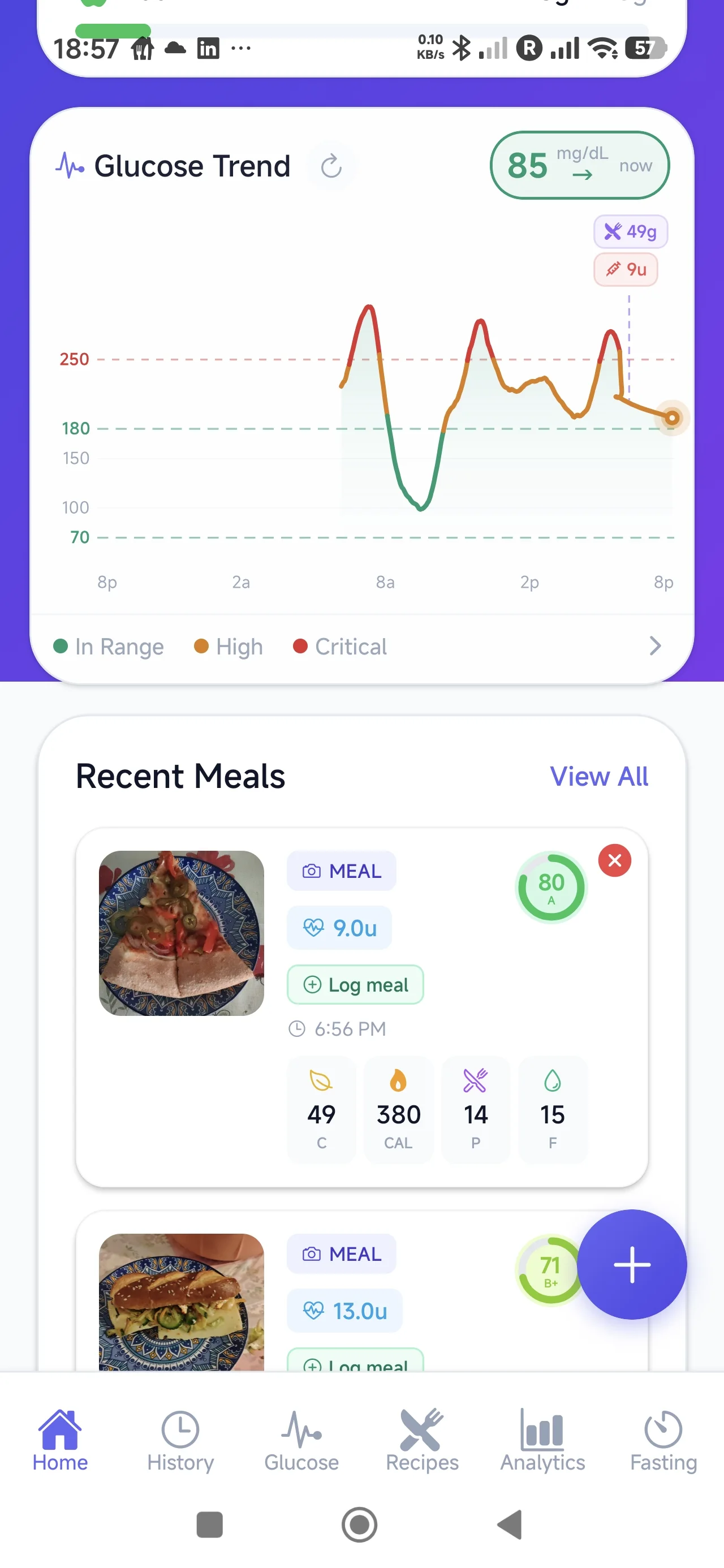
Continuous glucose monitors (CGMs) have made these patterns impossible to ignore. A meal that looks covered at two hours may still climb at three to five hours. Conversely, an aggressive pre-bolus for a high-fat meal can cause hypoglycemia before the carbs even hit the bloodstream. The result is more time out of range, more correction doses, and more frustration.
Postprandial glucose excursions are a major driver of time outside target range, and they directly affect energy, sleep, mood, and long-term risk. Mixed meals are also where many people feel least confident: restaurant portions, hidden sauces, and variable ingredients make a simple carb count unreliable. Carb counting apps and calculators promise a shortcut, but they are only as good as the data behind them and the strategy used after the number appears. This guide explains why carb-only dosing often fails for mixed meals and how to apply an evidence-based, safety-first framework.
What the best evidence says
Several recent reviews and studies shape how clinicians think about carb counting accuracy and mixed-meal dosing in type 1 diabetes.
- Carb-counting errors are common and clinically meaningful. A systematic review of carbohydrate counting accuracy (PMC10580506) found that errors in estimating carbohydrate content are frequent and associated with worse glycemic control and greater glucose variability. The source of error is often portion-size misjudgment, especially for mixed dishes and foods eaten away from home.
- Real-world estimation is hard. Observational research (PMID 36263447) highlights that many adults with type 1 diabetes struggle to estimate carbohydrate accurately, particularly for restaurant meals, homemade recipes, and foods without labels. Visual estimation alone frequently misses the true carbohydrate load.
- Fat and protein change the glucose curve. A body of evidence (PMID 27388474) shows that dietary fat and protein can delay gastric emptying, blunt early glucose rises, and produce sustained late hyperglycemia. High-fat meals may increase total insulin requirement and prolong the period over which insulin is needed.
- Advanced carb-counting strategies exist but require personalization. A review of advanced carbohydrate counting (PMID 37017468) describes approaches such as extended boluses, insulin timing adjustments, and fat-protein unit (FPU) calculations. These methods can improve postprandial control for some individuals, but trial designs and effect sizes vary, so they should be treated as tools for individualized care rather than universal rules.
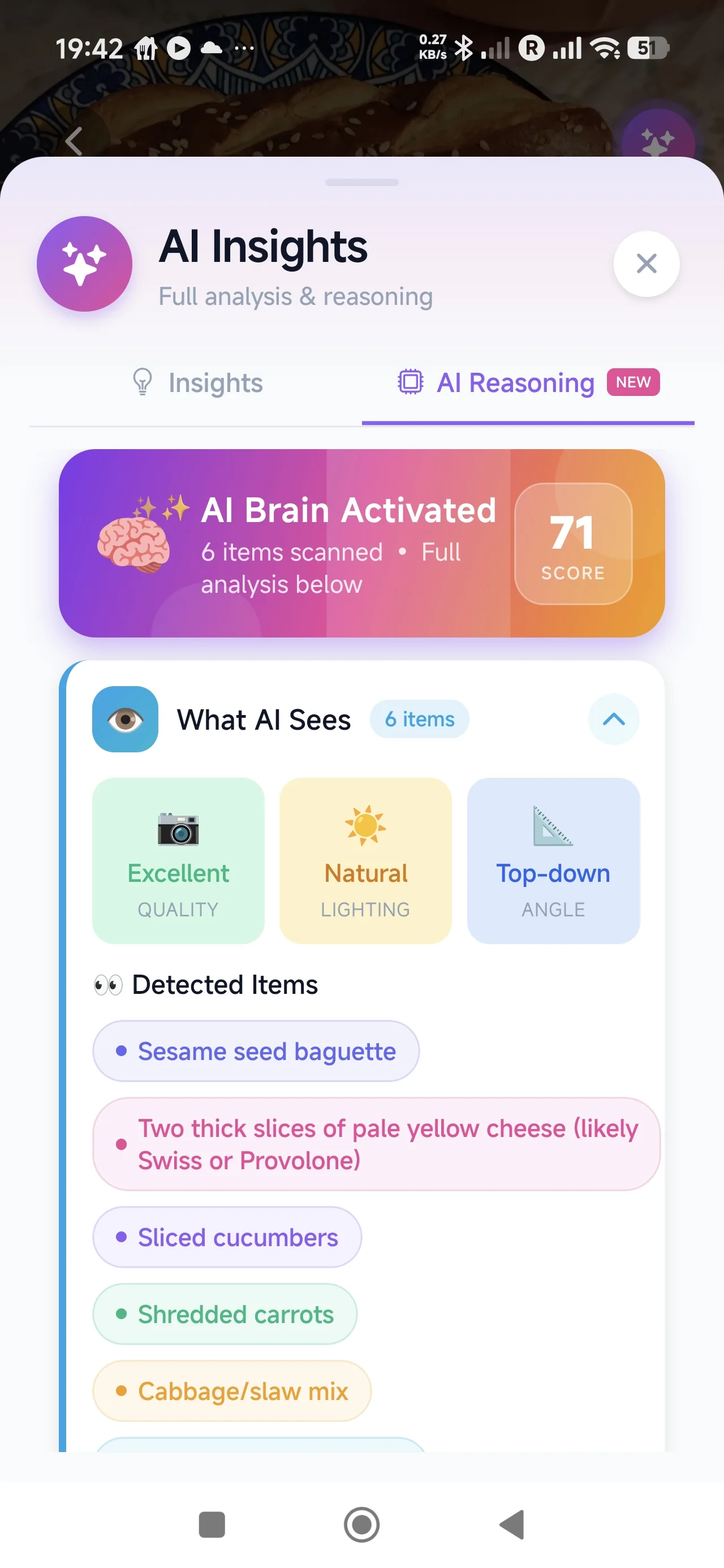
- Automated and AI-based tools are emerging. Preliminary work (PMC12479799; Snaq.ai research) explores image-based carbohydrate estimation and mixed-meal prediction algorithms. These technologies are promising, but validation in diverse real-world settings is still emerging.
Together, this evidence supports a practical conclusion: accurate carbohydrate counting is necessary but not sufficient for mixed meals. Dosing must also account for meal composition, timing, and individual response.
Where common advice fails
Many standard carb-counting messages were designed for simpler meals. Applied to mixed meals, they can backfire.
- “Just count net carbs.” Subtracting fiber and some sugar alcohols may work for low-fiber packaged foods, but it does not capture how fat and protein alter absorption. For mixed meals, the timing and shape of the glucose rise matter as much as the carb total.
- “Pre-bolus 15–20 minutes every time.” Early bolusing is helpful for low-fat, high-glycemic meals but can cause hypoglycemia with high-fat or slowly absorbed foods. Matching pre-bolus time to the meal is safer.
- “Trust the restaurant nutrition info.” Restaurant portions and preparation vary. A listed carbohydrate value can be off by a large margin, and sauces, dressings, and sides are often underreported.
- “All carbs are equal.” Glycemic index and load influence how quickly glucose rises. Fifty grams of white rice behaves differently from fifty grams of lentils or fruit, even before fat and protein are added.
- “One correction fixes a late spike.” Stacking rapid-acting insulin for a delayed high can lead to overlapping peaks and subsequent hypoglycemia. A planned extended dose is usually safer than chasing the curve.
- “The app knows best.” A carb counting app or carb counting calculator relies on databases that may be crowd-sourced, outdated, or based on generic recipes. They estimate; they do not measure your plate.
Practical dosing framework
Use this four-step framework for mixed meals. Adjust with your diabetes care team.
Step 1: Build the most accurate carb count possible
- Weigh food when you can, especially starches, grains, fruit, and baked goods.
- Use verified databases or labels rather than crowd-sourced entries.
- Account for sauces, gravies, breading, and mixed ingredients.
- Be cautious with “net carbs”; fiber subtraction is not standardized and may underestimate insulin needs for some people.
- Consider glycemic load: rapidly absorbed carbs often need earlier insulin, while slowly absorbed carbs may need delayed or extended delivery.
Step 2: Match insulin timing to the meal
| Meal pattern | Carb focus | Suggested insulin strategy | CGM checkpoints |
|---|---|---|---|
| Low-fat, simple carbs (fruit, plain rice, cereal with skim milk) | Total carbs; standard portion | Pre-bolus 10–20 min; standard bolus | 1–2 hours |
| Mixed moderate fat/protein (sandwich, stir-fry, sushi) | Total carbs plus sauces | Standard bolus or small extended portion; pre-bolus 0–10 min | 2 hours and 3–4 hours |
| High-fat/high-protein (pizza, burgers, creamy curry, lasagna) | Total carbs plus fat-protein units | Split/extended bolus over 2–4 hours; consider higher total dose | 3–5 hours; overnight if eaten late |
Step 3: Consider fat-protein units for high-fat meals
The fat-protein unit (FPU) method, sometimes called the Warsaw approach, converts extra calories from fat and protein into equivalent insulin need. A common rule of thumb is that every 100 kcal from fat and protein beyond the carb-based dose equals about one FPU, dosed as extended insulin over several hours. Evidence for FPU dosing is promising but mixed; it works well for some people and not for others. Start conservatively and validate with CGM trends.
Step 4: Use CGM to close the loop
- Check the 2-hour post-meal trend, but also look at 3–5 hours for mixed meals.
- If glucose is rising late, use a correction only if it fits your plan and active insulin time.
- Avoid correction stacking; instead, adjust the next similar meal’s extended bolus.
- Log meals, doses, and outcomes to refine ratios, timing, and FPU estimates.
Tool and app decision matrix
A diabetes meal carb app or carb counting calculator can help, but choosing the right tool depends on the meal and your goals. The matrix below compares common categories.
| Tool type | Best when | Accuracy considerations | Key limitations | Safety note |
|---|---|---|---|---|
| Basic carb database app (examples: MyFitnessPal, Lose It!, Cronometer) | Packaged foods, chain restaurants, labeled home cooking | Accuracy depends on user-entered data and portion verification | Mixed dishes and restaurant meals are often wrong; no insulin advice | Cross-check with labels; do not trust crowd-sourced entries blindly |
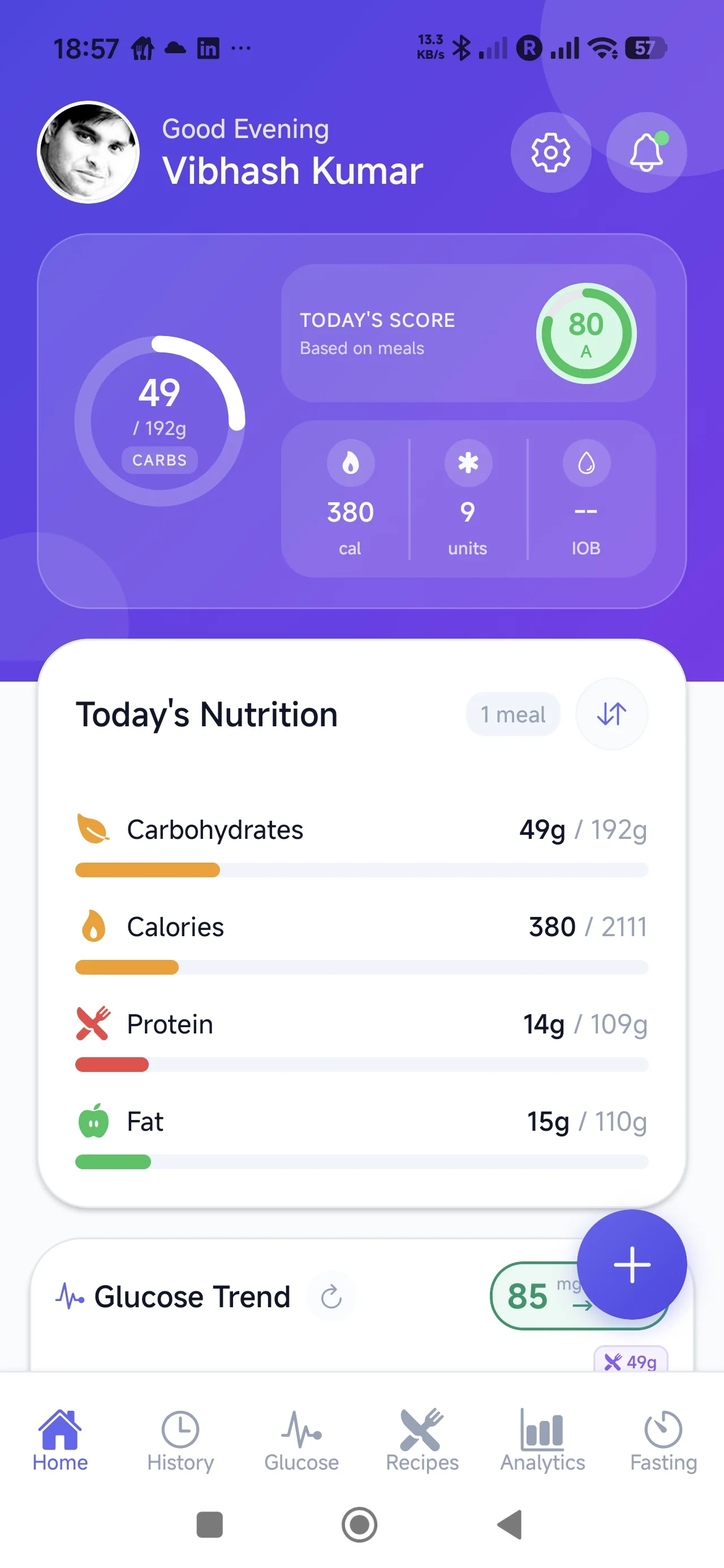
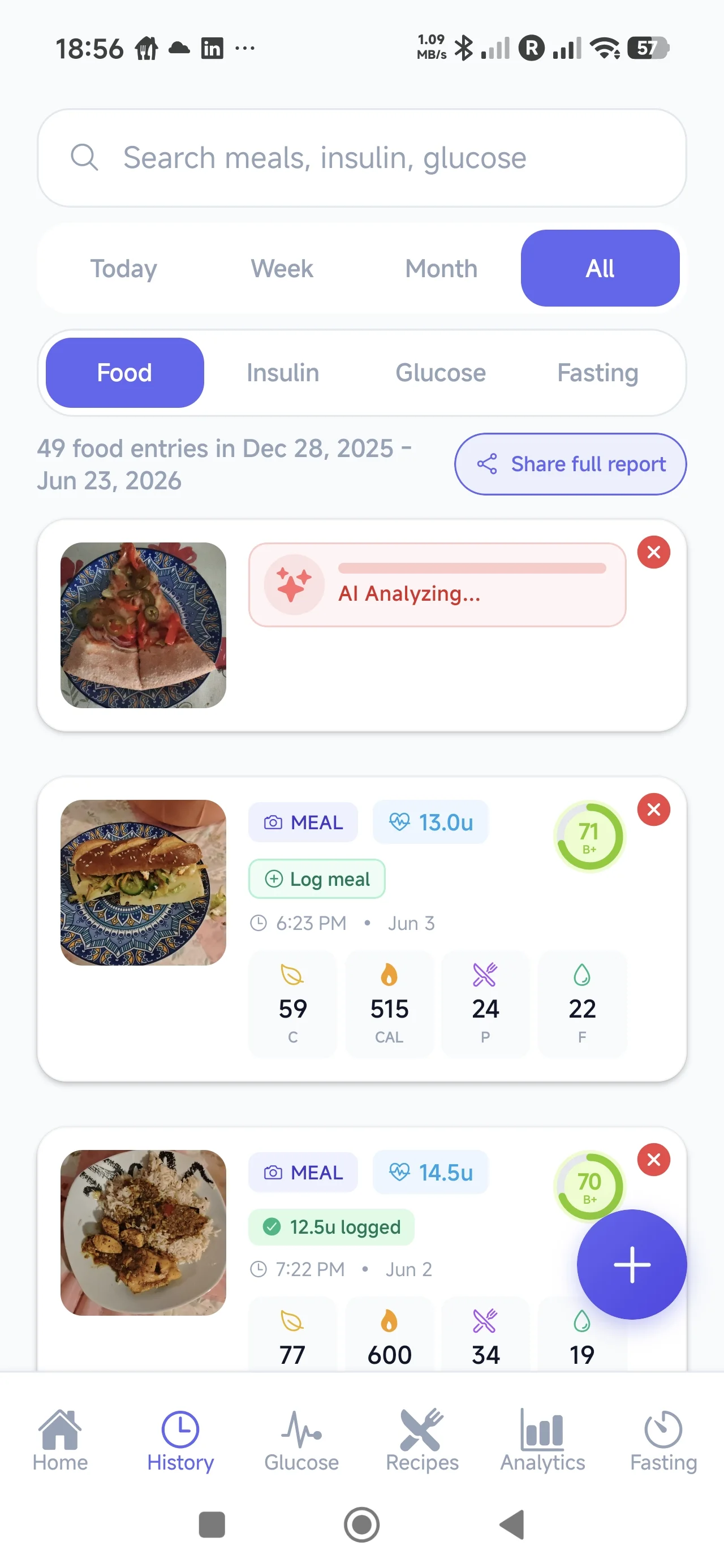
| Photo/AI carb estimator (examples: Snaq, Snap It) | Visual estimation when scales are unavailable | Improving but variable; best for simple, single-item plates | Hidden sauces, mixed ingredients, and unusual portions reduce reliability | Use as an estimate only; validate by weighing when possible |
| Integrated diabetes app with bolus calculator (examples: mySugr, Diabetes:M, InPen) | Logging glucose, carbs, and insulin together | Calculator output depends on programmed ratios and accurate carb input | Most do not model fat/protein or delayed absorption | Review calculated doses; follow local regulatory warnings |
| Smart pump/CGM system (examples: Tandem t:slim with Control-IQ, Omnipod 5, CamAPS FX) | Automated insulin adjustment and correction | Can reduce postprandial excursions through automated delivery | Still requires accurate carb entry; high-fat meals may need manual extended bolus | Keep emergency glucagon available; maintain a backup basal plan |
No app replaces clinical judgment. Use tools to inform decisions, not to override your care plan.
Safety boundaries and red flags
Mixed-meal dosing is powerful but can increase hypoglycemia risk if pushed too aggressively. Stay within these boundaries.
- Hypoglycemia risk: Early or large pre-boluses, exercise, alcohol, and gastroparesis can all delay carb absorption and cause lows. Carry fast-acting glucose and glucagon.
- Hyperglycemia/DKA: Persistent readings above your target with ketones, vomiting, or illness require urgent medical guidance.
- Special populations: Children, adolescents, pregnant individuals, and people with renal disease, gastroparesis, or eating disorders need individualized protocols.
- Medication and illness: Steroids, infections, and stress can raise insulin needs independently of meal composition.
- Algorithm limits: Do not let any app or calculator set ratios, correction factors, or basal rates without your care team’s approval.
- Red flags to contact your team: repeated severe lows, frequent lows after pre-bolusing, unexplained highs above 250–300 mg/dL (13.9–16.7 mmol/L) lasting more than a few hours, ketones, or inability to keep food down.
7-day implementation checklist
- Day 1 – Baseline: Pick your three most common mixed meals. Review recent CGM curves to see when each meal typically peaks.
- Day 2 – Measure: Weigh ingredients for one home-cooked mixed meal. Compare your visual estimate to the scale.
- Day 3 – Validate an app: Look up the same meal in your carb counting app and compare it to the label or recipe calculation. Note discrepancies.
- Day 4 – Log one mixed meal: Record carbs, fat, protein, insulin dose, timing, and CGM curve. Look for late rises.
- Day 5 – Try extended insulin: For a high-fat meal, discuss a small extended bolus with your team and apply it. Monitor 3–5 hours.
- Day 6 – Review patterns: Compare similar meals. Identify which foods delay glucose and which spike early.
- Day 7 – Adjust with your team: Bring your log to your diabetes care team and agree on ratio, timing, or extended-bolus changes.
FAQ
Why does my glucose spike 3–4 hours after a high-fat meal?
Fat and protein slow stomach emptying and can make carbohydrate absorption more gradual. Insulin from a standard bolus may peak before the glucose does, leaving too little insulin later. An extended or split bolus can match this delayed rise.
What is a fat-protein unit, and should I use it?
A fat-protein unit (FPU) estimates the insulin needed for calories from fat and protein. One common approach equates roughly 100 kcal from fat/protein to one FPU, delivered as extended insulin. It helps some people but not all; start small and confirm with CGM.
Are carb counting apps accurate for restaurant meals?
They are usually less accurate for restaurant meals because portions and preparation vary. Use them as a starting estimate, then compare with known ingredients and portion sizes. When possible, weigh leftovers or use chain-restaurant nutrition data.
How early should I bolus before eating?
For low-fat, high-glycemic meals, 10–20 minutes before the first bite often works. For high-fat or high-protein meals, bolusing at mealtime or even slightly after may be safer. CGM trend arrows and your care team can guide timing.
Can I just use net carbs for insulin dosing?
Net carbs can be useful for some high-fiber packaged foods, but it is not a universal rule. For mixed meals, total carbohydrate plus attention to fat, protein, and glycemic load usually gives better results.
What if my CGM shows a rise after I already corrected?
Avoid stacking rapid-acting insulin unless your plan allows it and active insulin has fallen. For repeated late rises, adjust the next similar meal’s extended bolus rather than chasing each high.
When should I contact my diabetes team about mixed-meal dosing?
Contact them before making major ratio or basal changes, if you experience severe or frequent hypoglycemia, if glucose stays very high with ketones, or if you have special circumstances such as pregnancy, gastroparesis, or illness.
References
- PMC10580506 — Systematic review on carbohydrate counting accuracy and glycemic outcomes in type 1 diabetes.
- PMID 36263447 — Study on real-world carbohydrate estimation challenges in adults with type 1 diabetes.
- PMID 27388474 — Review of dietary fat and protein effects on postprandial glucose in type 1 diabetes.
- PMID 37017468 — Review of advanced carbohydrate counting and mixed-meal insulin strategies.
- PMC12479799 — Emerging research on automated/AI-based carbohydrate estimation and mixed-meal prediction.
- Snaq.ai Research — Industry research on image-based food recognition and carbohydrate estimation.
This content is educational and does not replace individualized medical advice. Insulin changes should be reviewed with your diabetes care team.